
Features · November 16, 2026
What a wedding photographer's inquiry form should ask, and what to do next
The inquiry form is where a visitor becomes a possible booking. Here is what to ask first, which fields quietly cost you inquiries, and a simple first reply that keeps the conversation going.
A couple has looked at your pictures, read a little about you and decided to get in touch. This is the moment your whole website has been working toward, and it comes down to a few boxes on a screen.
A good inquiry form is short, easy on a phone and tells you what you need to write a useful first reply. A poor one makes the couple stop and think "this is a lot of work", and they open another photographer's tab instead. You rarely hear about those people.
Here is what to ask, what to leave out, and what to do when a message arrives.
Ask for the date first
The wedding date is the one thing that decides whether you can work together at all. If you are booked on that day, nothing else matters, and the quicker both of you know, the better.
Put the date near the top. Add a way to say "still deciding" for couples who have not picked one. A date picker that opens a calendar on a phone is friendlier than typing.
The fields worth asking
For a first message, these are plenty:
- Names. One field is fine. "Your name" or "Your names" works.
- Email. Required. This is how you reply.
- Wedding date. With a "not sure yet" option.
- Wedding location. A venue or a city. This tells you about travel and about the kind of wedding.
- How they found you. A short drop-down: Instagram, Pinterest, a friend or a planner, a search, somewhere else. Optional, and very useful for learning which of your efforts are working.
- A few words about the day. One open box. Not an essay, a few lines about what they have in mind.
Every one of our demo designs has an inquiry form, either on its own page or on the home page, and most ask for roughly these things: names, email, wedding date, place and a few words about the day. Try one on your phone to see how short it feels. (Demo forms do not send anything.)
Fields that quietly cost you inquiries
You can always ask for more once the conversation has started. Be careful with anything that makes a first message feel like an application:
- A required phone number. Many couples prefer to write first. Make it optional.
- Budget as a required field. Some couples do not know yet, and some feel put on the spot. If you want to qualify, show your starting price on your website and let the couple decide for themselves.
- Long questionnaires. Guest counts, hour-by-hour timelines and shot lists belong in the conversation after they book.
- Many required boxes. Each extra required field is one more reason to stop.
- Puzzles to prove they are human. Spam protection is sensible, but it should be invisible where possible.
Tell them what happens next
Right above or below the button, add one honest line: "I reply within two working days" or "I usually write back the same week". Pick a promise you can keep, and keep it. A visitor who knows when to expect an answer is far more patient.
After they press send, show a clear confirmation on the same page: "Thank you, your message is on its way. I will write to you by Thursday." A form that appears to do nothing makes people press the button twice or leave worried.
The first reply
Many couples write to a few photographers around the same time, and a prompt, warm reply is a simple way to stand out. It does not need to be long. A pattern that works:
- Thank them and use their names. Not "Dear client".
- Answer the date question straight away. "I am free on 12 June" or "I am already booked on that day, but I would love to recommend someone."
- Say one specific thing about their wedding. The venue, the season, something from their message. It shows you actually read it.
- Point to the next step. A short call, a link to your starting prices, or a few questions.
- Keep it short. Four or five sentences is plenty.
A simple example you can adapt (the names and the barn are made up):
Hello Anna and Sam, thank you for writing. A June wedding at Maple Hill Barn sounds lovely. I am free on 12 June. If you would like, we could have a short call this week so I can hear about your plans, and I will send my packages afterwards. What time of day suits you best?
If you do not hear back after a few days, one polite follow-up is fine. After that, let it go.
Some habits that help
- Check your inbox every day during booking season, and have a saved reply ready so you only need to add the names and the date.
- Test your own form every month. Fill it in on a phone and make sure the message arrives, and does not land in spam.
- Look at where inquiries come from once a quarter. If couples keep mentioning a venue or a post, write more like that.
How this works in a PageTend Studio design
Every PageTend Studio design comes with an inquiry form. Messages from your form are sent to your inbox, and the editor in your web browser also keeps a list of your inquiries, newest first, with a Reply button. There is nothing to download or install, because we host your site. If you are on the fully managed plan, inquiries go to your inbox and we keep the site running, so you can stay behind the camera. Try the inquiry pages on the live demos on the Designs page, see what each plan includes on the Pricing page, or get in touch with a question.
Keep reading: What to put on every page of a wedding photographer's website
Looking for a website that is ready when you are?
Browse the live demos, see what comes with each plan and make one yours. Nothing to download or install: we host your site.
More posts
 How to write a wedding blog post that is not a diaryMost wedding blog posts are a gallery with a thank-you. Here is an outline that turns a wedding into a short story couples can use: the place, five frames, one useful detail and a closing line.
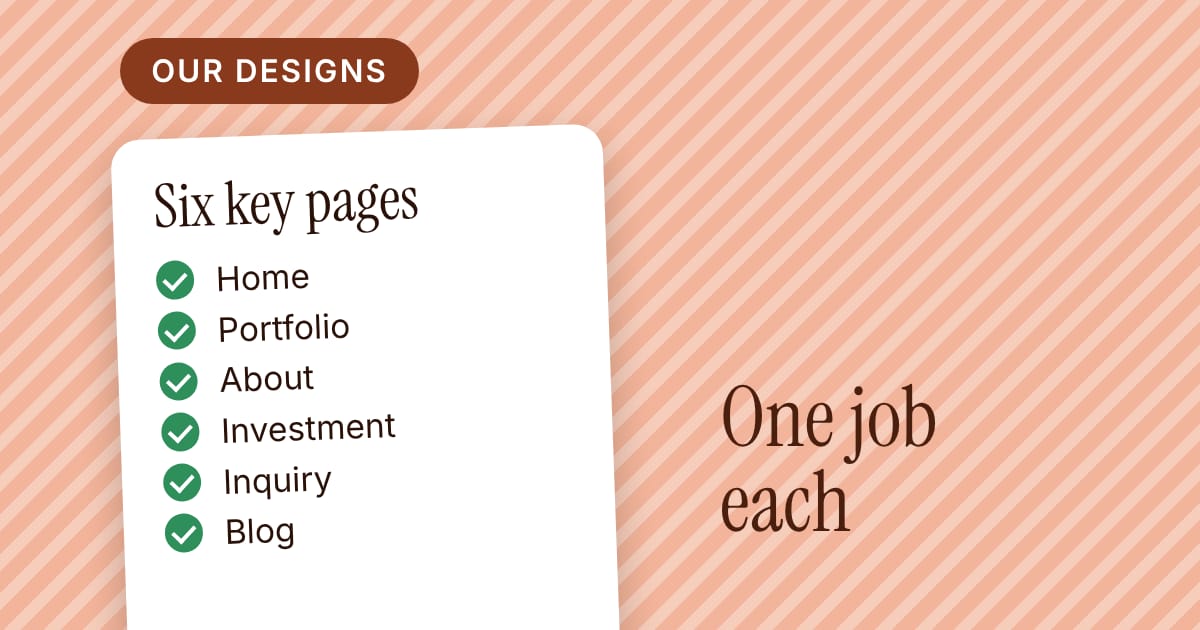 What to put on every page of a wedding photographer's websiteA wedding photographer's website does not need many pages, but each one has a job. Here are the six couples look for, what each should do, and the mistake we see most on each.
 How couples find a wedding photographer by venue, and what to put on the pageCouples plan around a place, so they search for the place. Here is what a venue page is, what belongs on it, the mistakes to avoid, and how to start with your five most-shot venues.