
Getting found · November 15, 2026
How to write a wedding blog post that is not a diary
Most wedding blog posts are a gallery with a thank-you. Here is an outline that turns a wedding into a short story couples can use: the place, five frames, one useful detail and a closing line.

Most wedding blog posts look alike. A line of thanks to the couple, a gallery of forty pictures, and a goodbye. The couple loves it, and so do their parents. Nobody else has a reason to read it.
But the next couple you want to reach is reading your blog too. They have a date, maybe a venue, and a question: "Will this photographer be good for our day?" A post can answer that question, if it is written as a short story about a place and a day rather than as a diary entry.
This guide gives you an outline you can reuse for every wedding, so a post takes an evening rather than a weekend.
Who the post is really for
There are two readers. The couple you photographed, who will love the pictures whatever you write. And a couple you have not met yet, who is deciding whether you are the right person for their own day.
Write for the second one. They want to see how you handle a real day: the room, the weather, the family, the schedule. They do not need to know what you ate for lunch.
The outline: five parts
1. A title that names the place and one specific thing. Not "Sam and Alex, a beautiful day". Try one of these patterns, and put in your own details:
- A June ceremony at [venue name]
- [Venue name] in the rain: how the day went
- Getting married at [venue name]: where the light is good at five o'clock
- Portraits by the water at [venue name]
A title that names the venue is also what a couple types into a search box when they are looking for someone who has worked there.
2. An opening of two or three sentences. Say where you were, what the day felt like and one thing you noticed. For example (a made-up venue): "Maple Hollow Barn sits at the end of a gravel lane, and by four in the afternoon the whole yard turns gold. It was the first time all week the rain held off." That is enough. Do not retell the whole day here.
3. The day in five frames. Pick five pictures and tell the day in order, with one or two sentences under each:
- Getting ready, or the first look
- The ceremony
- Portraits
- A detail someone else would have missed (a handwritten note, a dog in the aisle)
- The party, or the last picture of the night
Five is a guide, not a rule. The idea is to choose, because a story is what you leave out.
4. One useful detail. This is the part that makes the post worth reading for someone who was not there. Something you would tell the next photographer, or the next couple, about this place. Where the ceremony usually happens. How long the walk to the portrait spot really takes. Where you went when it rained. Only write what you saw yourself.
5. A closing line and a next step. One sentence about why the day worked, then a plain line such as "If you are planning a wedding at [venue name], I would love to hear about it", with a link to your inquiry page.
How many photos?
Fewer than you think. Fifteen to twenty-five good pictures in story order read better than a hundred in a grid, and they load faster on a phone. Choose a strong first picture, because it is the one that appears on your blog page and when someone shares the post.
Give each picture a short description (the "alt text" in your editor) that says what is in it, in plain words: "Bride and groom walking along a gravel lane toward the barn at sunset". It helps people who use screen readers, and it helps search engines understand the picture. Describe; do not stuff in keywords.
Check permission first
Before you post a wedding, make sure your contract lets you show the couple's pictures online, and use their names only if they are happy with that. Name the venue as the venue spells it. Do not write "preferred vendor" or "recommended by" unless it is true: a couple will take those words seriously.
When to add the venue
If a post is about a wedding at a particular place, add the venue to it. We wrote a separate guide on what a venue page is and how to build one from your posts. The short version: posts at the same venue gather on one page, and the page is only as useful as the stories behind it. So write the post first, and let the venue page follow.
How often
After weddings you loved shooting, within a week or two while you still remember the details. Once a month is a perfectly good rhythm; a busy season may leave you with none, and that is fine. A blog you keep up beats a big one you abandon.
Where the post lives
Every PageTend Studio design comes with a blog. There is nothing to download or install, because we host your site; you write your posts in a simple editor in your web browser, add your pictures, and press Publish. If you are looking for a place to put this kind of post, see the Designs and what is included on the Pricing page.
Try it this week
- Pick one wedding you enjoyed and are allowed to show.
- Choose five frames and write one or two sentences under each.
- Add one useful detail about the place.
- Read it aloud. If it sounds like a diary, cut the first paragraph.
Looking for a website that is ready when you are?
Browse the live demos, see what comes with each plan and make one yours. Nothing to download or install: we host your site.
More posts
 What a wedding photographer's inquiry form should ask, and what to do nextThe inquiry form is where a visitor becomes a possible booking. Here is what to ask first, which fields quietly cost you inquiries, and a simple first reply that keeps the conversation going.
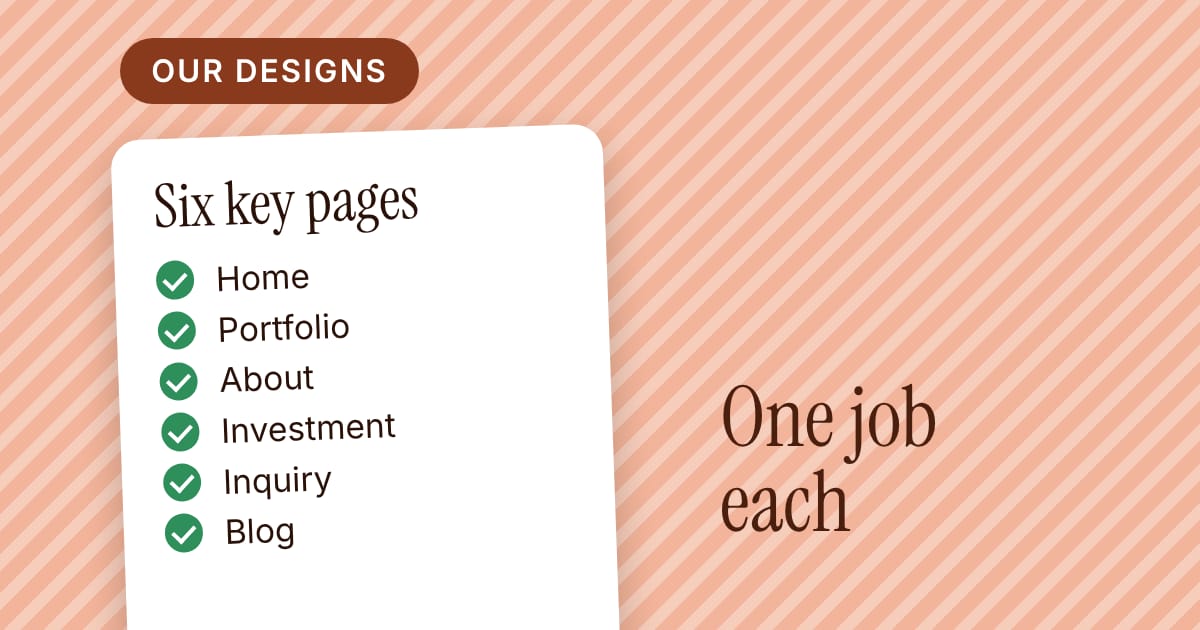 What to put on every page of a wedding photographer's websiteA wedding photographer's website does not need many pages, but each one has a job. Here are the six couples look for, what each should do, and the mistake we see most on each.
 How couples find a wedding photographer by venue, and what to put on the pageCouples plan around a place, so they search for the place. Here is what a venue page is, what belongs on it, the mistakes to avoid, and how to start with your five most-shot venues.